
To remove oil stains from pavers, soak up any fresh oil with clay cat litter, scrub the spot with a degreaser and a stiff nylon brush, then pull out whatever is left with a poultice that dries on the stain overnight. Fresh spills usually come out completely. Old stains usually lighten a lot but can leave a faint shadow, because oil soaks deep into the pores of a concrete paver.
The fastest way to remove oil stains from pavers is to start before the oil soaks in. Concrete pavers are porous, so every hour a spill sits there, more of it works its way below the surface where soap and water cannot reach it.
This guide walks through fresh spills, old stains, transmission fluid, what not to use, how Lakeland’s water restrictions affect cleanup, and how to keep oil from coming back.
- Stop the drip and soak up the fresh oil. Cover it with clay cat litter, baking soda or cornstarch. Do not hose it or wipe it.
- Sweep up the absorbent after several hours or overnight.
- Scrub with a degreaser and a stiff nylon brush, then rinse.
- Let the pavers dry and look again. Drying shows whether oil is still deeper down.
- Use a poultice on anything left. It draws oil up out of the pores as it dries.
How Do You Remove a Fresh Oil Spill From Pavers?
Cover a fresh oil spill with an absorbent right away, before you do anything else. Clay cat litter works well, and so do baking soda and cornstarch. Pile it on thick, grind it in lightly with your shoe, and leave it for several hours or overnight.
Do not wipe the spill with a rag or blast it with a hose. Wiping smears the oil across more pavers, and water does not dissolve oil. Both make a small spot bigger.
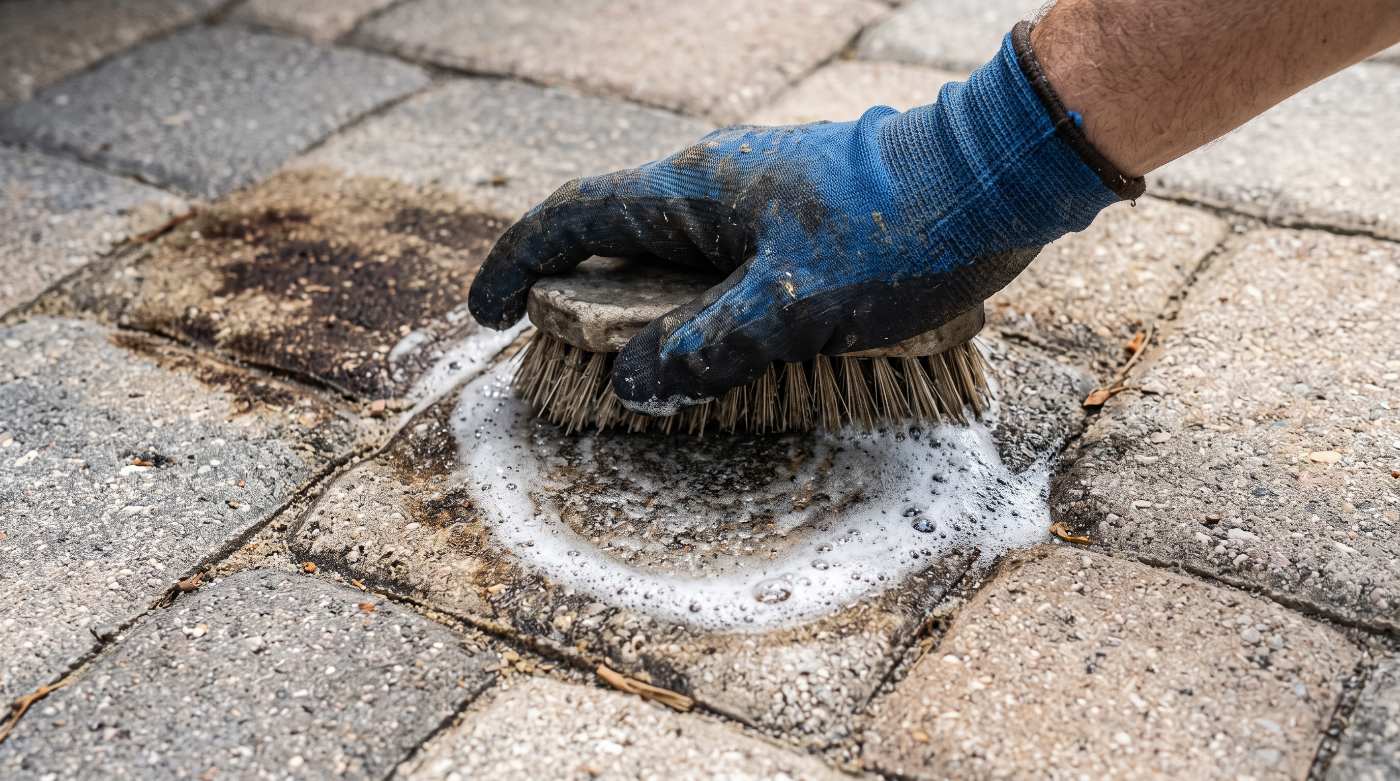
Once the absorbent has done its job, sweep it up and bag it. Then scrub the spot with a degreaser and a stiff nylon brush, and rinse with a small amount of water. Grease-cutting dish soap helps on oil that is still sitting on the surface, but it does little once the oil has soaked into the paver.
How Do You Get Old Oil Stains Out of Pavers?
Old oil stains need two steps: a degreaser for the oil on the surface, then a poultice for the oil deeper in the paver. Masonry cleaner maker PROSOCO lays out the same order. Its directions call for letting the degreaser sit for 1 to 3 minutes, reapplying and scrubbing, and then letting the pavers dry so any deeper stain shows up.
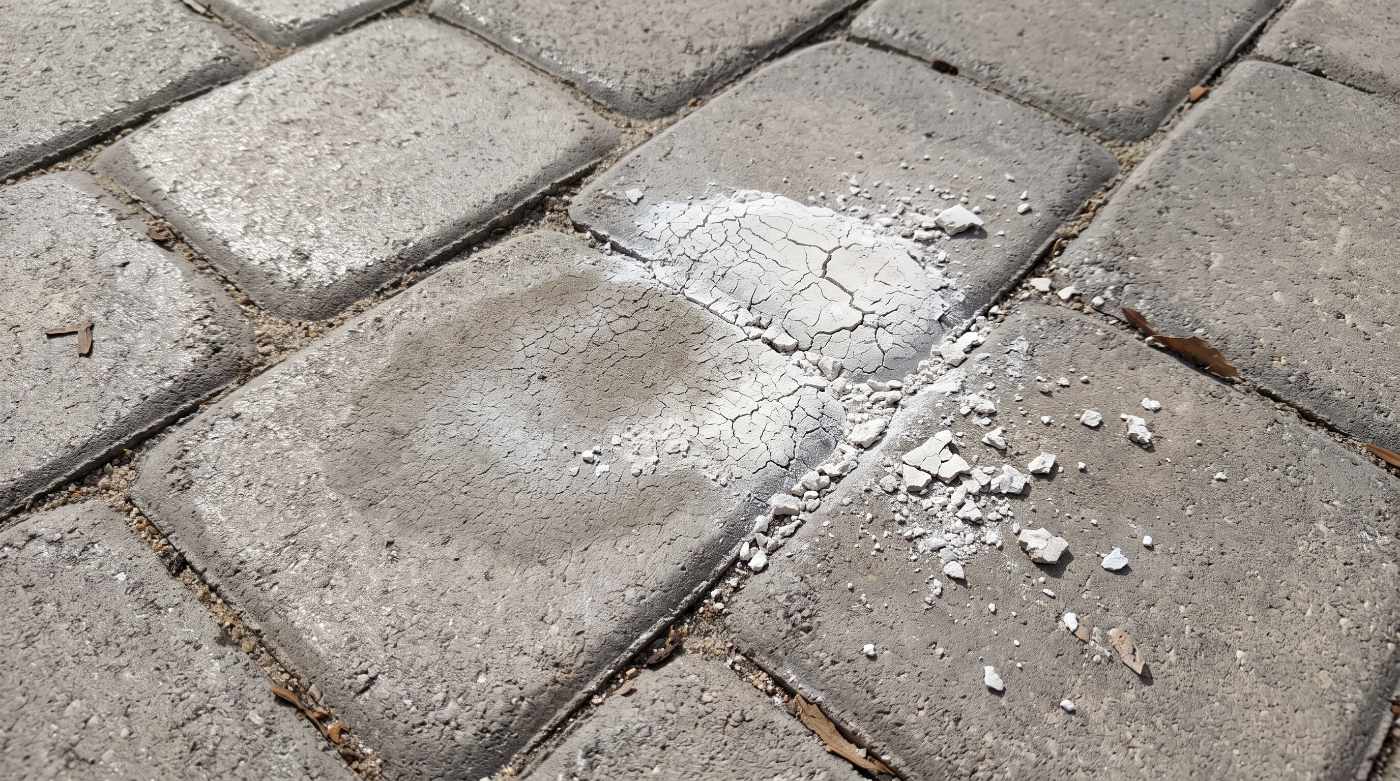
A poultice is a thick paste that you spread over the stain and leave to dry. As it dries, it pulls oil up out of the pores and traps it in the powder. PROSOCO’s poultice dries in about 5 to 8 hours, and some people leave it overnight. Once it cracks and turns to powder, sweep it up and rinse the spot.
A few tips that make it work better:
- Read the label. Dwell times and rinse steps change from product to product.
- Test a hidden paver first. Colored concrete pavers can lighten if a cleaner sits too long.
- Give it a second round. A dark, old stain often needs two or three treatments.
- Keep it out of the rain. A poultice has to dry to work, so pick a dry day.
Can Dried Oil Stains Be Removed From Pavers?
Yes, most dried oil stains can be removed or lightened a lot. Fresh spots usually come out with the right degreaser and a poultice. Stains that have set for years often fade but may not disappear completely, because the oil has had time to soak deep into the paver.
If a paver still shows a dark shadow after a few rounds, the cleanest fix is sometimes to pull that one paver and flip it or swap it. Pavers are set in sand, so one stained piece can come out without disturbing the rest.
How Do You Get Transmission Fluid Off Pavers?
Treat transmission fluid the same way as motor oil. Soak up the fresh fluid with cat litter, scrub with a degreaser, then use a poultice on whatever is left. Transmission fluid often has a red dye, so a fresh spot can leave a pinkish tint that takes an extra round to lift.
The same goes for power steering fluid, grease and gas. Oil, gas and transmission fluid all soak deep into porous concrete, so they are harder to remove than mold or algae. Wipe up gas quickly and let the area air out, since it is flammable.
Do not use gasoline, muriatic acid or a steel wire brush on oil stains. Gasoline is a fire hazard and just thins the oil so it spreads. Acid can etch the face of a concrete paver. Wire bristles leave bits of metal behind that rust into orange specks.
Will a Pressure Washer Remove Oil Stains From Pavers?
A pressure washer by itself does little to oil that has soaked into a paver. Water does not break down oil, so blasting the spot mostly moves the oil around and can knock joint sand loose. A degreaser and a poultice do the real work. A rinse only clears away what they lift.
That matters in Lakeland right now. The city is under Phase III water shortage restrictions through March 31, 2027, and the City of Lakeland’s rules allow pressure washing only for necessary purposes, such as preparing a surface for sealing or removing mold or a safety hazard. A cosmetic pressure wash is not allowed, and fines can reach $500. The absorb, scrub and poultice method uses very little water, which makes it a good fit while the restrictions are in place.
If you plan to seal your pavers, the cleaning that comes before sealing counts as allowed use. That is the best time to have stubborn oil spots treated. Our driveway cleaning in Lakeland pre-treats stains like oil before the surface cleaner goes over the whole driveway.
How Do You Get Rid of the Oil and the Cleanup Mess?
Do not wash oil into the street or a storm drain, and do not pour used motor oil in the trash. Polk County bans motor oil from landfill disposal, and county residents can recycle used motor oil at the Polk County Household Hazardous Waste facility in Winter Haven. Call the facility at (863) 284-4319 to ask how they want oil-soaked absorbent bagged and dropped off.
Catch drips in a pan while you wait to fix a leak, and let the oil settle before you pour it into a sealed container for drop-off.
Do Oil Stains Come Out of Sealed Pavers More Easily?
Yes. Sealed pavers give you time. A good sealer slows down how fast oil soaks in, so a fresh drip sits on the surface longer and wipes up before it stains. On unsealed pavers, that same drip starts soaking in right away.
Two things to know if your pavers are sealed:
- Clean spills fast anyway. Sealer slows oil down but does not stop it forever.
- Test strong cleaners first. Some degreasers and solvents can dull a sealer. Try a hidden spot before you treat a stain in the middle of the driveway.
Our paver sealing in Lakeland includes a deep clean, fresh joint sand and two coats of sealer, so oil and other spills have a harder time getting into the paver in the first place.
How Do You Keep Oil Stains From Coming Back?
Fix the leak first. A car that drips in the same spot every night will stain the pavers again no matter how well you clean them. Until the repair, park over a drip pan or a piece of cardboard.
After that, sealing does the heavy lifting. If you are thinking about sealing, timing matters in Florida, so read when the best time to seal pavers in Florida is before you book. Dark rubbery streaks are a different problem, and we cover them in why tire marks show up on a sealed paver driveway. If you want to clean and seal a patio yourself, start with how to clean a brick paver patio before sealing it.
Paver Oil Stain Questions, Answered
Will Dawn dish soap remove oil from pavers?
It helps on fresh oil that is still sitting on the surface. Once oil soaks into the paver, dish soap does little, and you need a degreaser and a poultice.
Does cat litter remove oil stains from pavers?
Clay cat litter soaks up fresh, wet oil so less of it gets into the paver. It does not pull out an old, dried stain. Use it first on a fresh spill, then follow with a degreaser.
Does vinegar remove oil stains from pavers?
No. Vinegar is not a degreaser, and acids can etch concrete pavers. Use a cleaner made for oil on concrete or masonry instead.
How long should a poultice sit on an oil stain?
Until it dries completely and turns to powder. PROSOCO’s poultice takes about 5 to 8 hours, and some people leave it overnight. Check the label on the product you use.
Can old oil stains be removed completely?
Sometimes. Fresh spots usually come out. Stains that have set for years often lighten a lot but can leave a faint shadow.
Need Oil Stains Treated Before You Seal?
We are based on the south side of Lakeland and clean and seal pavers across Lakeland Highlands, Christina, Scott Lake and the 33803, 33811, 33812 and 33813 zip codes, plus the rest of Polk County. Point out your oil stains when you ask for a quote, and we will tell you honestly how much we expect them to lift. Free estimates.