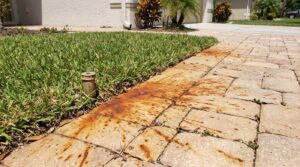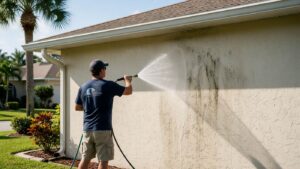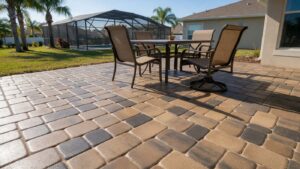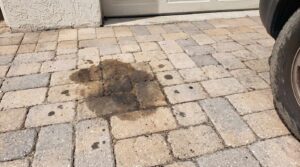

The difference between soft washing and pressure washing is what does the cleaning: pressure washing uses high-pressure water to blast dirt off hard surfaces, while soft washing uses a cleaning solution at low pressure to kill and rinse away algae, mold and mildew. Driveways, pool decks and pavers get pressure washed. Roofs, house walls, screens and painted surfaces get soft washed. Most Florida homes need both.
The soft wash vs pressure wash question comes down to the surface. Concrete can take high pressure. A shingle roof, stucco wall or pool screen cannot, and blasting them is how homeowners end up with stripped granules, gouged stucco and torn screens.
Here is how each method works, which surfaces get which one, why roofs should never be pressure washed, and how Lakeland’s water restrictions apply to both.
What Is Soft Washing?
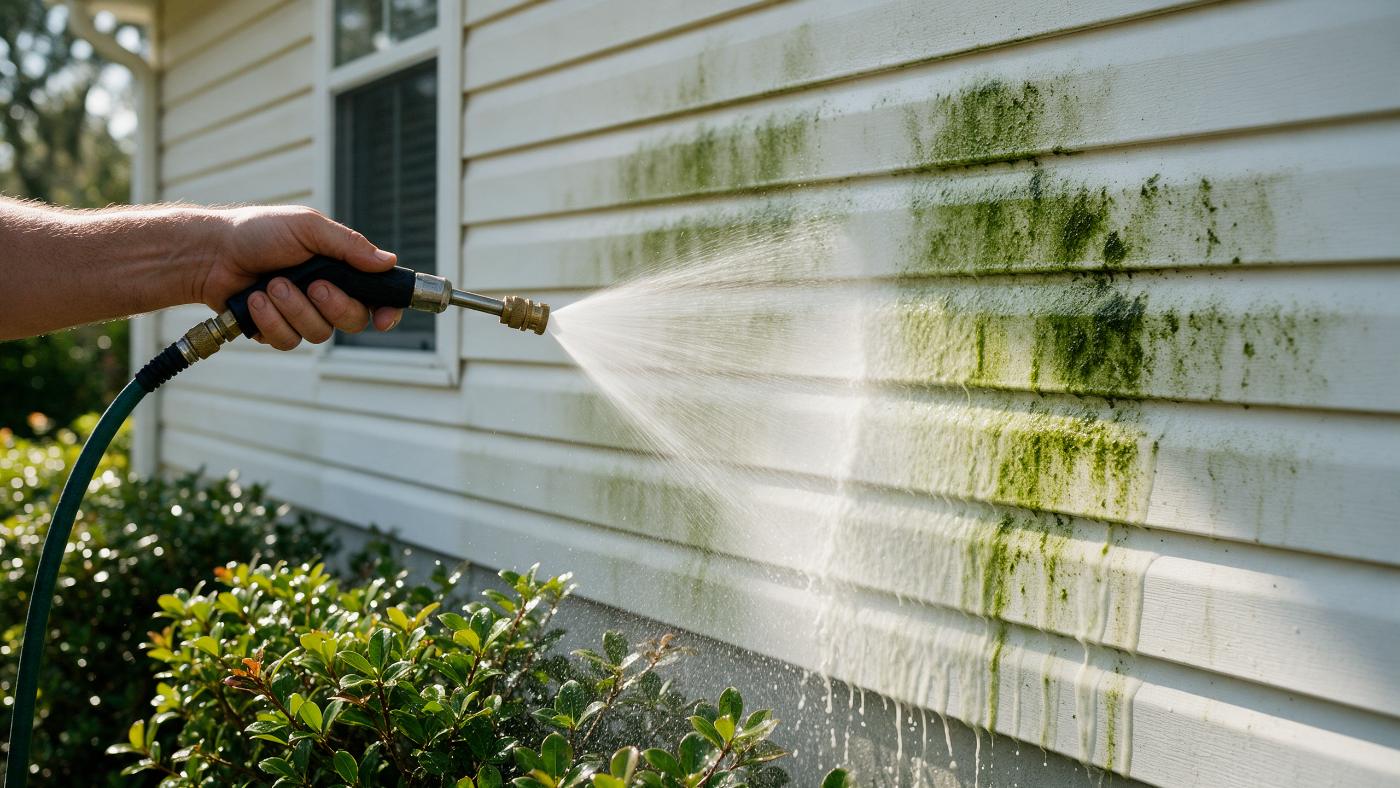
Soft washing is a cleaning method that uses a cleaning solution, applied at low pressure, to kill algae, mold and mildew, followed by a gentle rinse. The solution does the work, so the water only needs enough pressure to carry it on and rinse it off.
A typical soft wash goes like this:
- Wet the plants and surrounding areas to protect them.
- Apply the cleaning solution at low pressure.
- Let it dwell so it can break down the growth.
- Rinse gently from the top down, and rinse the plants again.
The method is backed by the roofing industry. The Asphalt Roofing Manufacturers Association says algae stains on shingles can be lightened with a solution of household bleach (sodium hypochlorite) and water, left on the roof for 15 to 20 minutes before rinsing.
What Is Pressure Washing?
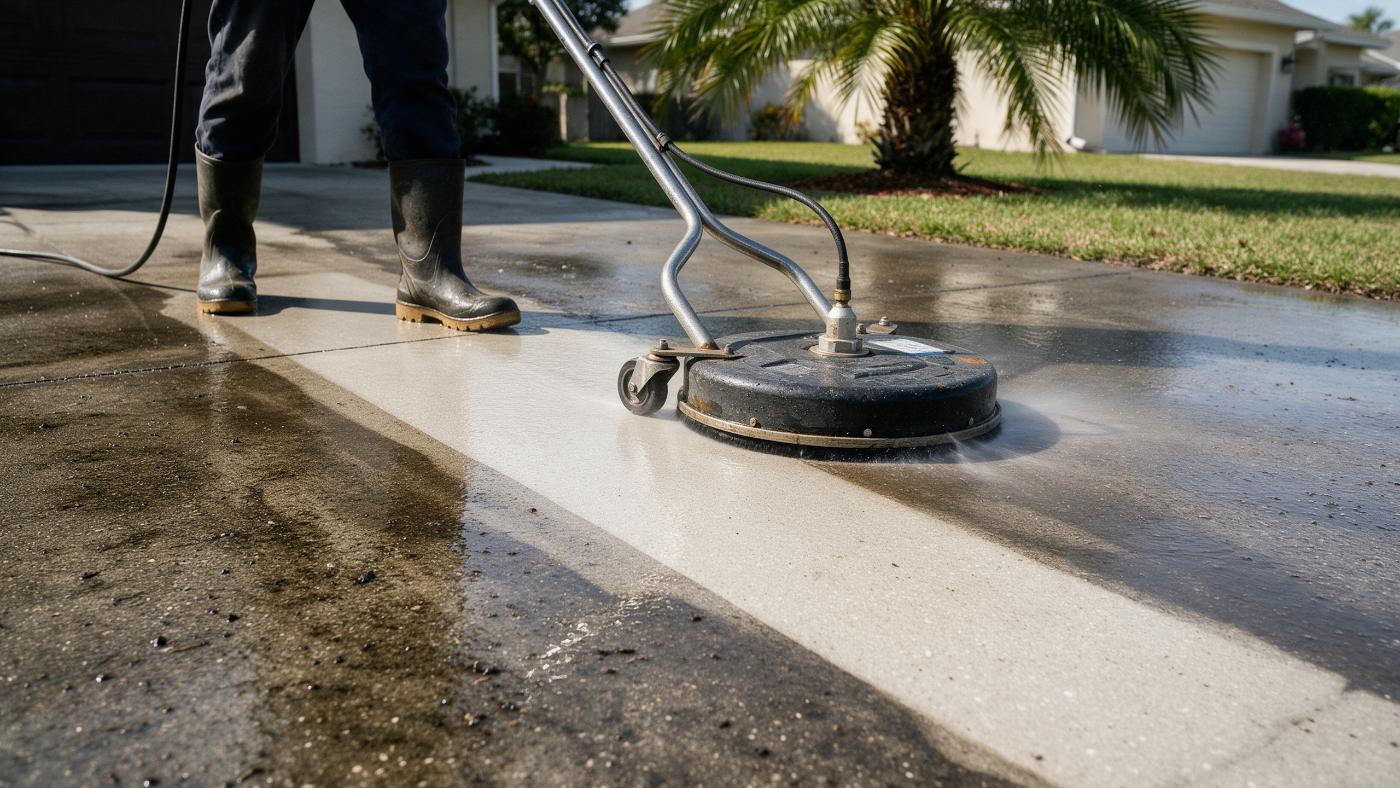
Pressure washing uses high-pressure water to physically blast dirt, grime and growth off a surface. It works best on hard, durable surfaces like concrete driveways, sidewalks and pavers, where force is safe and a cleaning solution alone would take too long.
The right tool matters as much as the pressure. On flat concrete, a rotating surface cleaner spreads the pressure evenly across the whole surface, which avoids the stripes and etched lines a handheld wand can leave. On our driveway jobs, a detergent goes on first to break down mold, mildew and algae, then the surface cleaner does the heavy work and a rinse clears it away.
Which Surfaces Need Soft Washing and Which Need Pressure Washing?
The rule of thumb for soft wash vs pressure wash: if a surface is hard and bare, it can usually be pressure washed. If it is soft, painted, coated, porous or has layers water can get behind, it should be soft washed.
- Pressure washed: concrete driveways, sidewalks, pool decks, patios and pavers
- Soft washed: shingle, tile and metal roofs, stucco and vinyl house walls, fences, awnings and pool screen enclosures
- Often both: commercial buildings, apartment complexes and gutters, where walls get soft washed and flatwork gets pressure washed
Screen enclosures are a good example of why the method matters. Screens tear easily under pressure, so they need a cleaner and a gentle rinse, which we cover in how to clean lanai screens without damaging them.
Why Shouldn’t You Pressure Wash a Roof?
You should not pressure wash a roof because high pressure damages roofing materials. The Asphalt Roofing Manufacturers Association says high-pressure washing systems are likely to damage asphalt roofing and should not be used to remove algae. On shingles, the pressure strips off the protective granules. On tile, it can crack pieces and force water underneath.
That is why our roof cleaning in Lakeland uses a non-pressure method that follows the roofing association’s guidance, with a gentle rinse at the end. We go deeper on shingles in can you pressure wash a shingle roof in Florida.
Roof cleaning is not a DIY job. A wet, freshly treated roof is slippery, and the roofing association itself says the work is best left to professionals for that reason.
How Many PSI Is a Soft Wash?
A soft wash runs at very low pressure, often compared to the flow from a garden hose. There is no single official number, because the pressure depends on the equipment and the surface. What defines a soft wash is that the cleaning solution does the work, not the force of the water.
Pressure washing sits at the other end. Equipment commonly runs in the thousands of PSI, which is why it cleans concrete so fast and why it can damage softer surfaces just as fast.
Does Soft Washing Last Longer Than Pressure Washing?
On surfaces with algae and mildew, a soft wash usually stays clean longer, because the cleaning solution kills the growth instead of just knocking off the top layer. Plain water pressure can leave living growth behind in the pores, so the green comes back sooner.
No cleaning lasts forever in Central Florida, though. The roofing association notes that the effect of cleaning is temporary and the discoloration may return. Shade, sprinklers and humidity all shorten the time before the next cleaning.
Is Soft Washing Safe for Plants and Pets?
Soft washing is safe for plants and pets when the crew plans for them. That means wetting the landscaping before the cleaning solution goes on, keeping overspray off plants, and rinsing everything nearby when the job is done. Keep pets inside while the work is going on and until the rinse water has dried.
Pressure washing uses fewer cleaning products, but it brings its own risks: flying debris, water forced into gaps, and damage to anything softer than concrete.
How Do Lakeland’s Water Restrictions Affect Soft Washing and Pressure Washing?
Lakeland is under Phase III water shortage restrictions through March 31, 2027. Under the City of Lakeland’s rules, pressure washing is allowed only for necessary purposes, such as preparing for painting or sealing and removing mold or safety hazards. Cosmetic washing and washing to meet HOA standards are not allowed, and violations can bring fines of up to $500.
What that means in practice:
- Allowed: cleaning pavers before sealing, washing a house before painting, and removing mold or a slippery safety hazard.
- Not allowed: a routine wash just to make the driveway or house look nicer.
Check the city’s page before you book, and ask your cleaning company which category your job falls into. Our paver sealing in Lakeland includes the cleaning before the sealer, and our driveway cleaning and soft wash house washing in Lakeland can be planned around what the rules allow.
Soft Wash vs Pressure Wash Questions, Answered
Is soft washing the same as pressure washing?
No. Pressure washing relies on high-pressure water to remove dirt. Soft washing relies on a cleaning solution at low pressure to kill and rinse away growth.
How many PSI is a soft wash?
There is no single number, but a soft wash runs at very low pressure, often compared to a garden hose. The cleaning solution does the work.
Can you soft wash a roof?
Yes. A soft wash is the recommended way to clean shingle, tile and metal roofs. High-pressure washing can damage roofing.
Is it a good idea to pressure wash your house?
Not with high pressure. It can strip paint, gouge stucco and force water behind siding. A soft wash is the safer way to clean house walls.
Does soft washing kill mold and algae?
Yes. The cleaning solution kills the growth, which is why a soft wash usually stays clean longer than plain water pressure on the same surface.
Not Sure Which Your Home Needs?
We are based on the south side of Lakeland and handle both: soft washing for roofs, house walls and screens, and pressure washing for driveways, pool decks and pavers, across Lakeland Highlands, Christina, Scott Lake and the 33803, 33811, 33812 and 33813 zip codes, plus the rest of Polk County. Tell us what you want cleaned, and we will match the method to the surface. Free estimates.