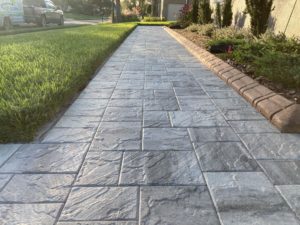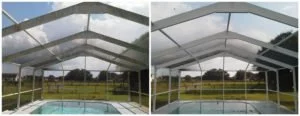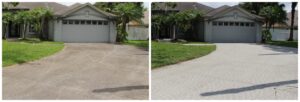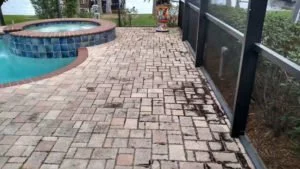

The best time to seal pavers in Florida is the dry season, which runs from about October through May, on a day with no rain in the forecast for 24 hours before and after the job. In Lakeland, November through April sits in the middle of that window, away from the storms that hang around at both ends. You can still seal in summer, but only on a morning when the pavers are bone dry and the afternoon storms are hours away.
The best time to seal pavers in Florida comes down to two things: dry pavers and a dry forecast. Sealer has to soak into a clean, dry surface and then cure without getting rained on. Florida gives you months where that is easy and months where it is a daily gamble.
Here is how the calendar plays out in Central Florida, what to watch for in summer heat, how long to wait on new pavers, and how Lakeland’s current water rules affect a sealing job.
When Is the Best Time to Seal Pavers in Florida?
The dry season is the best time to seal pavers in Florida. The Southwest Florida Water Management District, which covers Polk County, describes an eight-month dry season from October through May that averages about 2.7 inches of rain a month. Its four-month rainy season, June through September, averages about 7.8 inches a month.
Here is what that means month by month:
- October: Good, with a catch. The dry season usually settles in around mid to late October, so early October can still bring summer-style storms. Watch the forecast closely.
- November through April: The best window. Fewer storms, lower humidity and milder sun make it easier to get pavers fully dry and keep them dry while the sealer cures.
- May: Still workable. Rain stays light until the rainy season starts, which usually happens in late May, but the sun is strong and the pavers get hot by midday.
- June through September: The hardest stretch. Afternoon storms show up almost daily, and pavers soak up that water and hold it.
Hurricane season also wraps up on November 30, so a fall or winter sealing job is not racing tropical rain the way a September job is. When we schedule paver sealing in Lakeland, we pick the day around the forecast for exactly this reason.
Can You Seal Pavers in the Summer in Florida?
Yes, you can seal pavers in a Florida summer, but the timing gets tight. Summer storms in Central Florida usually build in the afternoon as the day heats up, so the safest plan is to start early on a day with a clean forecast and finish well before the clouds stack up.
Two other summer problems matter:
- Wet pavers. A heavy afternoon storm soaks the pavers and the sand under them. They can look dry on top the next morning while still holding water underneath.
- Hot pavers. Midday sun heats pavers well past the air temperature. Sealer on a hot surface can dry before it soaks in evenly, which leaves a blotchy finish.
Heat also matters after the job. A fresh coat stays soft for a while, and hot tires can mark it. We explain that problem in why tire marks show up on a sealed paver driveway.
Is It Okay If It Rains After Sealing Pavers?
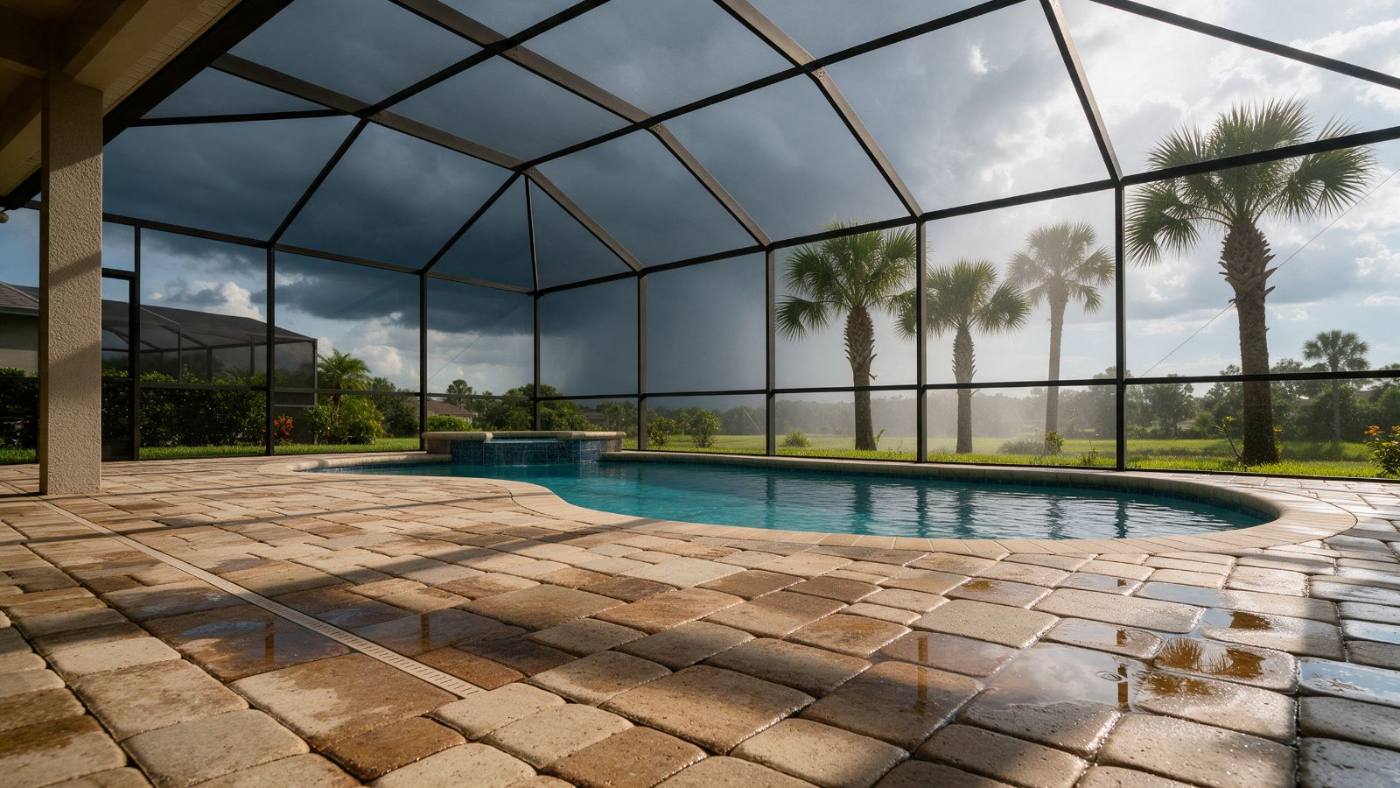
Rain within the first day after sealing can ruin the finish, so plan for at least 24 hours of dry weather after the last coat. Water that lands on sealer before it cures can leave white spots or a cloudy haze. Moisture trapped under the sealer causes the same cloudy look, which is why the pavers also need to be dry before the job starts.
After the sealer cures, rain is good news. Water should bead up on the surface instead of soaking in. When it stops beading, that is a sign the sealer is wearing thin.
Most sealed pavers handle light foot traffic within a few hours once the sealer dries clear. Cars and heavy furniture need about a full day or longer, depending on heat and humidity.
How Long Should You Wait to Seal New Pavers?
Most new pavers need a few months before their first sealing. New concrete pavers push out a white, chalky mineral residue called efflorescence as they cure. Sealing too early traps that residue under the sealer, where it shows up as a white haze you cannot wash off.
If your installer used polymeric sand in the joints, that sand also has to cure fully before any sealer goes on. A new patio installed in late summer often lines up well with a first sealing in the cool, dry months that follow.
New pavers do not all behave the same, so it pays to have someone look at them before you pick a date.
How Do You Know Your Pavers Are Ready to Reseal?
Your pavers are ready to reseal when water stops beading on the surface or the color starts to look dull and faded. In Florida, a first sealing typically lasts about 2.5 to 3 years, depending on sun, traffic and upkeep.
Other signs to look for:
- Joint sand sitting low or washing out after storms
- Weeds or ant hills coming back in the joints
- Stains soaking in instead of wiping up
- An old sealer that has turned cloudy, white or peeling
You do not need to seal pavers every year. Resealing too often builds up thick layers that can cloud over. If you spot these signs in the summer, book the job for the dry season instead of rushing it.
Do Lakeland’s Water Restrictions Affect Paver Sealing?
Yes, and the rules work in your favor if you plan to seal. Lakeland is under Phase III water shortage restrictions through March 31, 2027, because of the ongoing drought. Under the City of Lakeland’s Phase III rules, pressure washing is allowed only for necessary purposes, and preparing a surface for sealing is one of them.
A cosmetic pressure wash on its own is not allowed right now in Lakeland, and violations can bring fines of up to $500. Cleaning that prepares pavers for sealing, or removes mold or a safety hazard, is allowed. HOAs also cannot require you to pressure wash while the restrictions are in place.
That makes the dry season an especially good time to do the full job. Cleaning the pavers right before sealing them is the kind of work the rules allow, and the sealer keeps them looking clean for years afterward.
What Has to Happen Before the Sealer Goes Down?
Good timing only helps if the prep is right. Before any sealer goes on, the pavers need to be:
- Deep cleaned. Mold, algae and ground-in dirt from the rainy season have to come out of the pores, the same growth we cover in how to get algae off a concrete driveway in Florida.
- Stripped, if needed. Old sealer that has turned cloudy or started peeling has to come off so the new coats bond.
- Re-sanded. Fresh sand fills the joints to the right height so the sealer locks it in place.
- Dry. The surface and the joints need to be dry all the way through.
If you want to handle the prep yourself, start with our guide on how to clean a brick paver patio before sealing it. Pool decks need extra rinsing, especially around salt water pools, which we cover in does salt water damage pavers around a pool.
How Much Does It Cost to Seal Pavers?
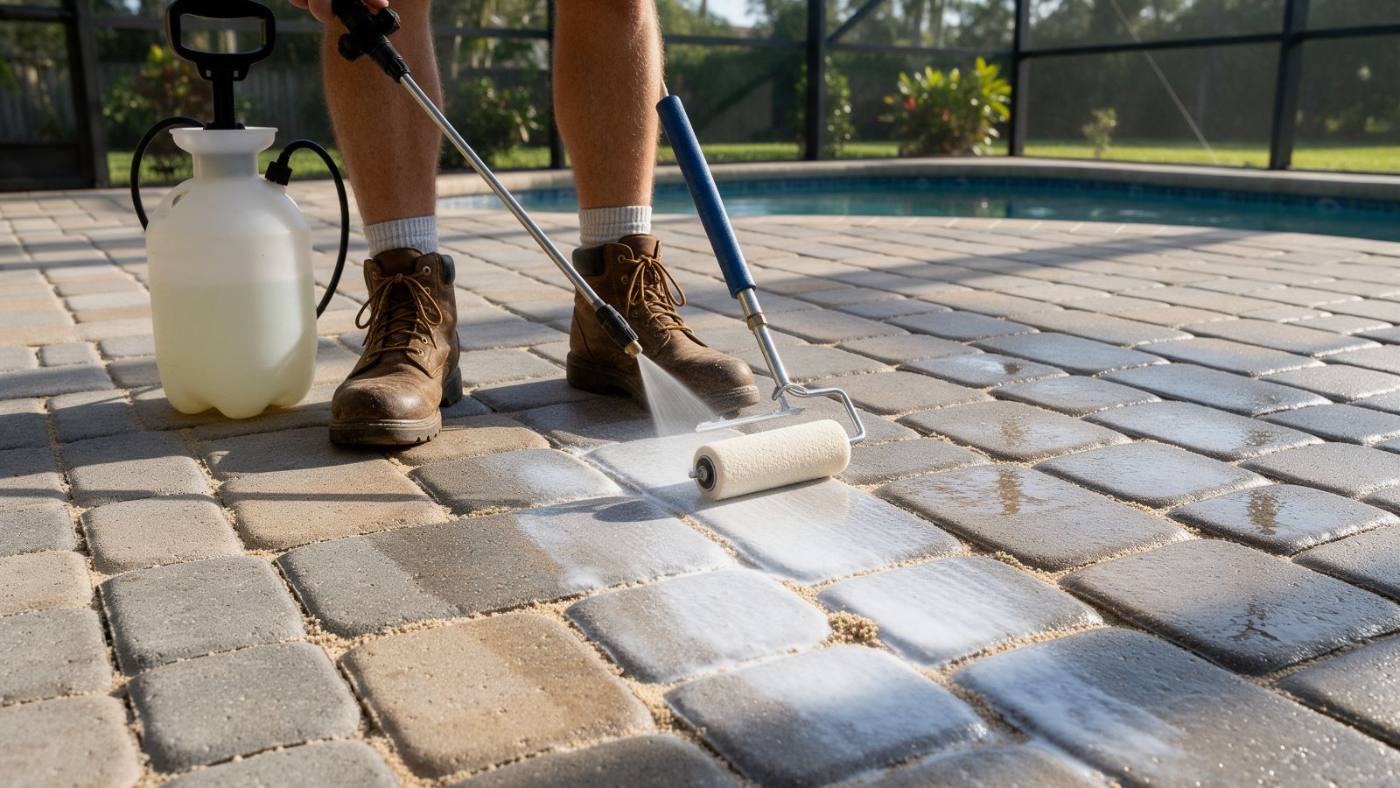
The cost to seal pavers depends on the size of the area, the paver type, the shape the pavers are in, and whether old sealer has to come off first. Timing does not change the price much, but it does change how long the job lasts. A sealer that cures in dry weather holds up better than one that got rained on.
We break down what goes into the price in how much paver sealing costs in Florida.
Paver Sealing Timing Questions, Answered
Is October a good month to seal pavers in Florida?
Late October usually is. The dry season tends to settle in around mid to late October, so early October can still bring afternoon storms. Check a few days of forecast before you book.
Is it okay if it rains after sealing pavers?
Not in the first 24 hours. Rain on uncured sealer can leave white spots or a cloudy haze. After the sealer cures, rain should bead up and roll off.
Can you seal pavers in the winter in Florida?
Yes. Winter is one of the best times to seal pavers in Florida because it is dry and mild. On cool mornings, wait until the dew dries off the pavers, and follow the temperature range on the sealer label.
Do you need to seal pavers every year?
No. A first sealing typically lasts about 2.5 to 3 years in Florida. Reseal when water stops beading or the color starts to fade.
How soon can you walk on pavers after sealing?
Most sealed pavers handle light foot traffic within a few hours once the sealer dries clear. Wait about a full day or longer before parking a car on them.
Ready to Seal Your Pavers This Dry Season?
We are based on the south side of Lakeland and seal pavers across Lakeland Highlands, Christina, Scott Lake and the 33803, 33811, 33812 and 33813 zip codes, plus the rest of Polk County. We clean, re-sand and seal in one visit, scheduled around a dry forecast. Free estimates.