
Clean lanai screens by brushing off the loose debris first, washing the mesh with a mild soapy solution and a soft-bristle brush, then rinsing from the top down with a garden hose. Screen mesh is delicate, so the whole job comes down to light pressure and gentle contact.
The part that causes most of the damage is force. Get the pressure or the brush wrong and you stretch the mesh, pull it out of its track, or tear a panel that then needs replacing.
What Is a Lanai Screen?
A lanai screen is the mesh that encloses a lanai, the covered porch on the back of many Florida homes. It is usually fiberglass or aluminum, stretched into an aluminum frame and held in place by a rubber cord called a spline.
The lanai is the room, not the screen. It is a roofed, open-sided outdoor living space attached to the house, Hawaiian in origin, and it usually has a solid roof tied into the main roofline. Not all lanais have screens, and not all screen enclosures are lanais.
- Lanai. Roofed outdoor room, screened sides. Also called a screened lanai or a Florida room
- Pool cage or screen enclosure. Screen overhead as well as on the sides. Locally you will hear bird cage
- Lanai screen. The mesh itself, held in the frame by the spline
Plenty of Lakeland homes have both, a lanai under the house roofline that opens into a screened cage over the pool.
Is Cleaning a Pool Cage Different From Cleaning a Lanai?
Yes, and the screen roof is the reason. On a pool cage, leaves, pollen and twigs settle on top of the panels instead of falling past them, so the debris load is heavier and it bakes on through the summer.
You also cannot brush an overhead panel the way you brush a wall panel, because there is nothing behind it to push against. And everything you rinse comes back down onto you, the deck, and the pool.
Vertical lanai panels are the straightforward half of the job. The screen roof is the part people underestimate.
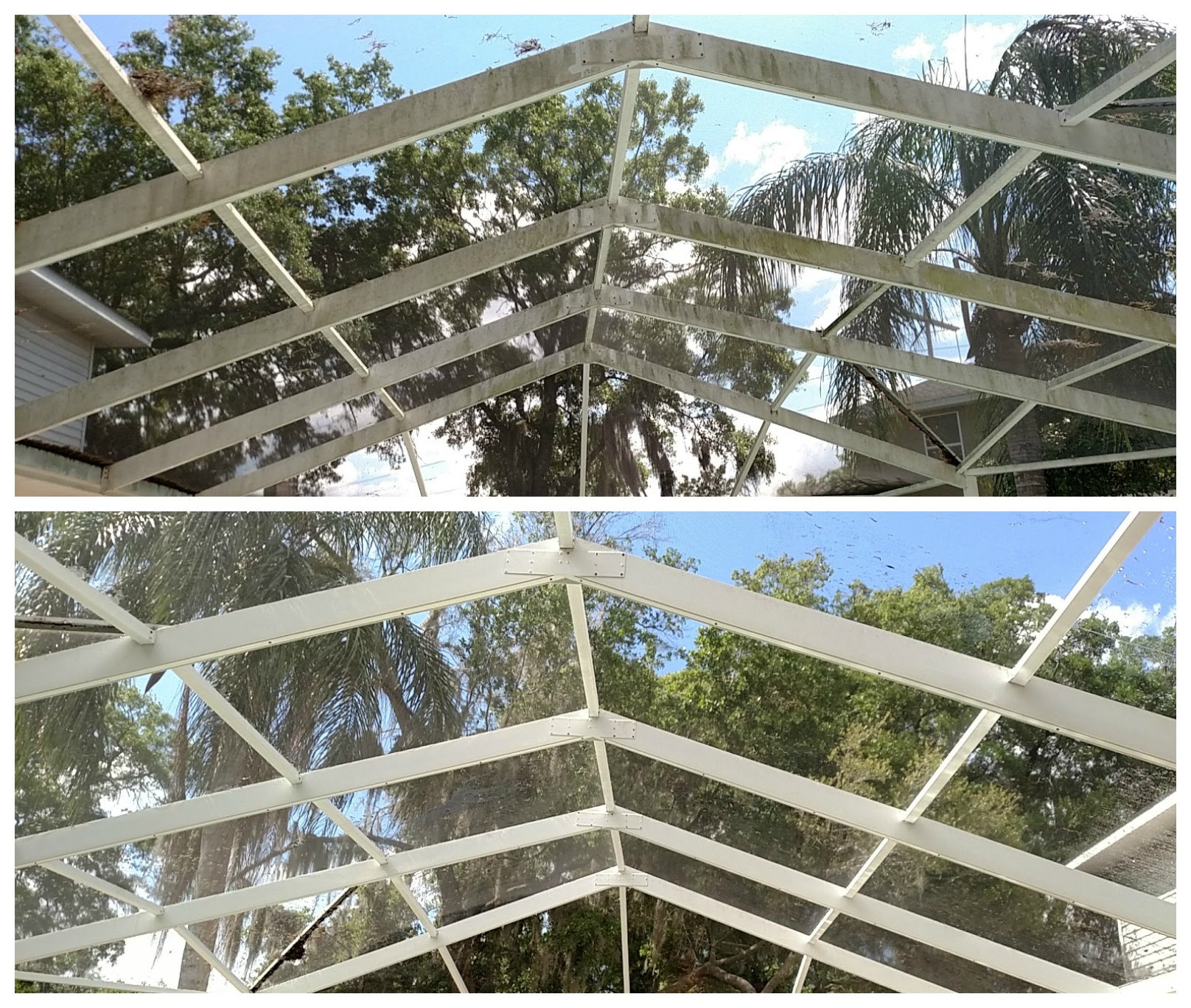
Why Do Lanai Screens Turn Green in Florida?
Screen mesh is textured, it stays damp, and it sits in shade for most of the day, which makes it an easy surface for growth to settle into. It is the same algae and mildew we clear off stucco and siding during a house wash, and we cover what it actually is in what the green stuff growing on your house actually is.
In Polk County, a few things turn screens green:
- Oak pollen. Spring coats everything, and the mesh holds it like a filter
- Lake humidity. Screens near water stay damp longer after dew and rain
- Grass clippings and dust blown up from mowing and open ground
- Shade. A lanai is covered by definition, so the mesh rarely sees direct sun
How Do You Clean Lanai Screens Without Damaging Them?
You will need a soft-bristle brush or a large sponge, a bucket, mild dish soap, and a garden hose. A pump sprayer makes it easier but is not essential.
- Dry brush the debris off first. Go over the mesh gently with the dry brush to knock off pollen, cobwebs and leaf litter. Wetting that debris first turns it into a paste that is harder to shift.
- Soak the plants and move the furniture. Wet down the grass and landscaping with plain water before you start, and take cushions and rugs out entirely.
- Mix a mild soapy solution. A few drops of dish soap in a bucket of warm water is the standard mix. For green growth, an outdoor cleaner made for screens works better than soap alone.
- Wash gently, top to bottom. Phifer, which manufactures screen mesh, recommends cleaning vinyl-coated screening with a mild soapy solution while avoiding hard scrubbing. The brush should flex, not the screen.
- Rinse with a garden hose. Work from the top down and keep the stream at an angle rather than straight into the mesh.
- Keep runoff out of the pool where you can. Direct water away from the edge and rinse carefully along the coping. If a lot of cleaner gets in, test the water and adjust.
- Rinse the plants again and let everything dry before the furniture goes back.
If the screens have been left a few years, expect to go over them more than once. One pass cleans up an enclosure that gets regular attention. A neglected one often takes two or three applications.
Do this on an overcast morning if you can. Florida sun dries soap onto the mesh before you get to rinse it, which leaves streaks worse than what you started with.
Can You Pressure Wash Lanai Screens?
Not the way you would pressure wash a driveway. The machine itself is not really the issue, the tip and the distance are.
Professionals do run screen work through a pressure washer, but at low pressure with a wide 40 degree tip held well back, which delivers a soft fan rather than a jet. Soft wash equipment works the same way, pushing cleaning solution at a fraction of the pressure the pump is capable of.
What tears screens is a narrow tip, or any tip held close. That stretches the mesh, pushes the spline out of its track, and can blow a panel out of the frame entirely.
If you do not have a 40 degree tip and the discipline to keep your distance, use a garden hose. A rescreen costs considerably more than a cleaning.
What Should You Never Use on a Lanai Screen?
- A narrow pressure washer tip. Anything tighter than a 40 degree fan carries real risk of tearing
- A stiff or wire brush. It snags the weave and leaves permanent pulls. Soft bristles only
- Hard scrubbing. Phifer’s own guidance is a mild soapy solution without hard scrubbing, so let the solution do the work
- Harsh chemicals. Bleach and ammonia can weaken screen fibers and corrode the aluminum frame
How Do You Clean Second-Story or High Lanai Screens?
This is the part most guides skip, and it is where homeowners actually get stuck.
For anything above comfortable arm’s reach, a soft-bristle brush on an extension pole and a hose-end applicator will handle washing and rinsing from ground level. What you should not do is take a bucket up a ladder and lean sideways into a screen panel. Screen offers no support, so there is nothing to catch you, and you will likely put an elbow through the mesh on the way.
Two-story cages, cathedral-style pool enclosures and anything over water are the jobs worth handing to someone with the right reach equipment.
Why Is My Lanai Frame Still Chalky After Cleaning?
Because that is a different problem. The white, chalky film on aluminum frames is oxidation, not dirt. Florida sun breaks down the factory finish over the years and leaves a powdery residue that soap will not lift.
Oxidation needs a cleaner made for aluminum, and heavily weathered frames may not return to their original finish. Worth knowing before you scrub harder and harder at a frame that was never going to come clean.
Should You Clean the Screens or Replace Them?
Cleaning handles more than people expect. Screens that look permanently gray or green are often just heavily soiled, and they come back.
Replacement is the honest answer when:
- The mesh has tears, holes or pulls you can put a finger through
- Panels sag or ripple and no longer sit tight in the frame
- The spline is brittle, cracked or already lifting out of the track
- The screen tears when you brush it gently, which means the fiberglass has gone brittle with age
If several panels fail that test, cleaning the rest is money spent on screen you will replace within a year or two anyway.
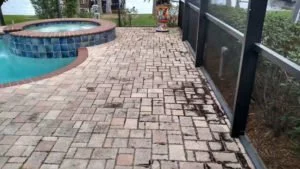
The floor under them is a separate question. Staining on a slab almost never means it is finished, and the black stuff that shows up on a Florida pool deck lifts off with the right pre-treatment.
How Often Should Lanai Screens Be Cleaned in Florida?
The easiest tell is the view. When you notice the mesh instead of looking through it, it is time. Catching it early also means a lighter clean, which is gentler on screen that is already a few years old.
Lanais under heavy oak canopy, screens close to a lake, and anything that catches the spring pollen season will want it sooner than the rest.
Whatever falls through the screen lands on the floor underneath, so the enclosure and the slab usually come due together. Our deck and patio cleaning covers the floor on the same visit.
Lanai Screen Cleaning Questions, Answered
Can you use Dawn dish soap on lanai screens?
Yes. A few drops in a bucket of warm water is the standard mild soapy solution. For established green growth an outdoor cleaner formulated for screens works better.
Will vinegar clean lanai screens?
Diluted vinegar helps on light mildew spots. It is weaker than a screen cleaner and does less against heavy algae.
Can you pressure wash a lanai screen?
Only with a wide 40 degree tip held well back, which is how professional crews do it. Without that tip, use a garden hose.
Do you have to take the screens out to clean them?
No. Panels are cleaned in place. Removing them risks damaging the spline and is only worth doing when they are being replaced.
What is the difference between a lanai and a screen enclosure?
A lanai usually has a solid roof tied into the house roofline, with screen on the sides. A screen enclosure or pool cage has screen overhead too. Many homes have both.
Can the pool deck be cleaned at the same time?
Yes, and it makes sense since everything rinses downward. Our pool deck cleaning is often booked alongside the enclosure.
Want Your Lanai Screens Cleaned Properly?
We use soft wash methods at screen-safe pressure, and we will tell you honestly whether a panel is worth cleaning or replacing. Free estimates across Lakeland and Polk County.