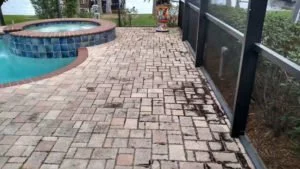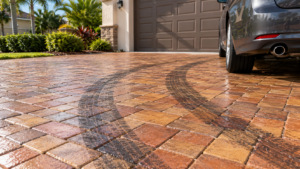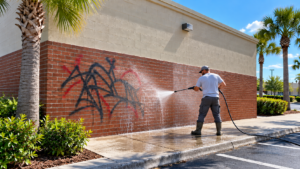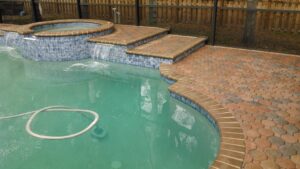

To get algae off a concrete driveway in Florida, mix one part household bleach with four parts water, spray it on, let it sit for 10 to 15 minutes, then rinse it off. The solution kills the algae living in the pores of the concrete. The rinse only removes what the solution already killed. That order is the whole method, and getting it backwards is why most driveways turn green again within months.
Florida makes this harder than most places, because heat, humidity, and afternoon rain feed algae most of the year. Here is the method in full, what to avoid, and the point where it stops being worth doing yourself.
Why Does Algae Grow on Florida Concrete?
Algae needs moisture, shade, and something porous to settle into. Concrete holds water in thousands of tiny pockets long after the surface looks dry, which makes a driveway close to ideal.
Around Lakeland you will usually see it worst in these spots:
- The north side of the house, which gets the least direct sun
- Under oak canopy or along a fence line
- Wherever a downspout or sprinkler head keeps the concrete damp
- Low spots that hold water after an afternoon storm
If one strip of your driveway is green and the rest is clean, shade or constant moisture is usually the reason, and it is also why the same strip comes back first every time.
Is Green Algae on Concrete Dangerous?
It is mostly a slip hazard rather than a health hazard. Wet algae is genuinely slick, and a green driveway or walkway is one of the more common places people go down at home.
It also holds moisture against the concrete. Over years that accelerates surface wear and opens the pores further, which is why an untreated driveway greens up faster each season than it did the one before.
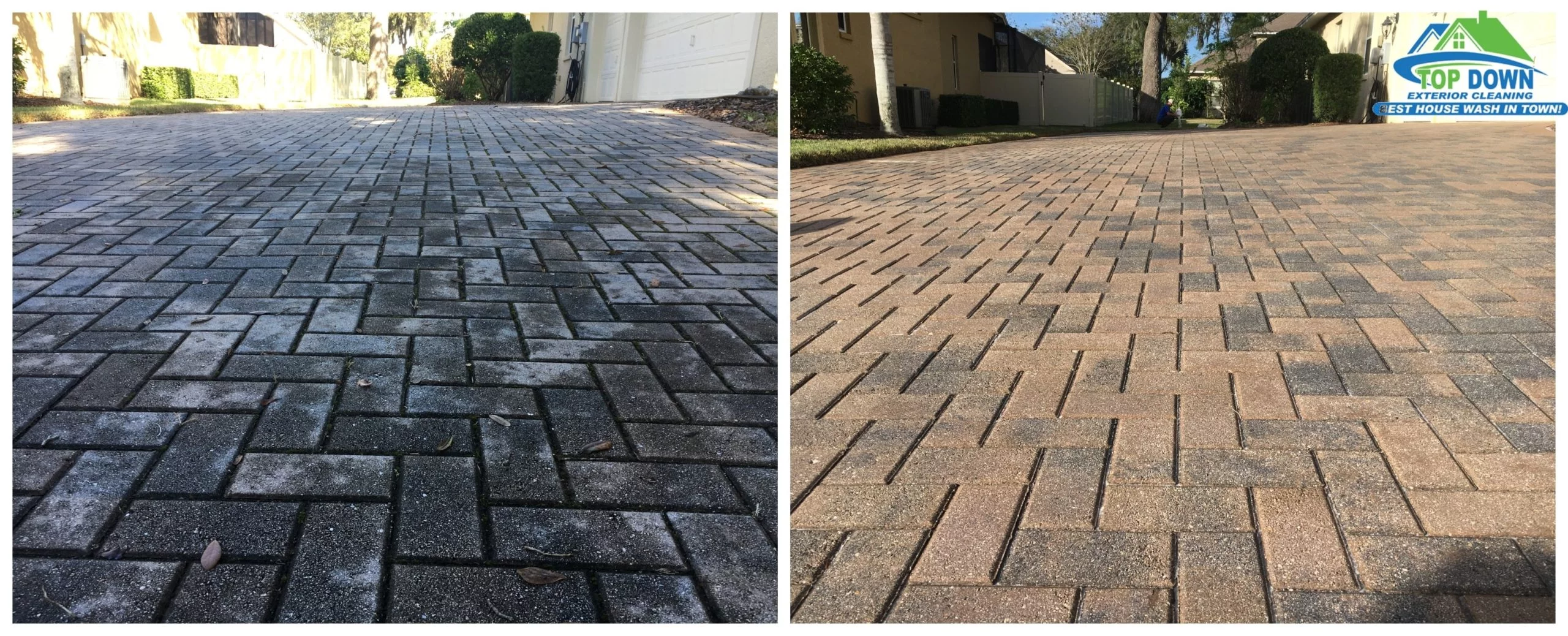
How Do You Remove Algae From Concrete Yourself?
For a small patch, this works. You will need household bleach, a pump garden sprayer, a stiff-bristle deck brush, and a garden hose.
- Clear the driveway. Move cars, mats, and planters. Sweep off leaves and loose dirt so the solution reaches the concrete rather than the debris sitting on it.
- Soak the plants first. Wet down every bit of grass and landscaping along the edges with plain water before you start. Wet foliage absorbs far less runoff than dry foliage.
- Mix one part bleach to four parts water in the pump sprayer. Household bleach is sodium hypochlorite, the same active ingredient in commercial outdoor cleaners, just weaker.
- Spray it on evenly and wait 10 to 15 minutes. The green will fade as it works. This dwell time is the step people skip, and skipping it is why the growth returns.
- Scrub only the stubborn spots with the stiff-bristle brush. Most of the surface will not need it.
- Rinse the whole driveway thoroughly, then rinse the plants and grass again. Flush everything well away from beds and storm drains.
On a hot Florida afternoon the solution can dry before it finishes working. Do this in the morning or on an overcast day, and re-wet the surface if it starts drying early.
Never mix bleach with ammonia, vinegar, or any acid-based cleaner. The combination produces toxic gas. Bleach and water only, and keep pets and children off the driveway until the final rinse is done.
Will Pressure Washing Alone Remove the Algae?
It removes what you can see, and that is the trap. The algae lives down in the pores of the concrete, so stripping the top layer leaves the growth behind and it comes back from the same spot as soon as the humidity returns.
Turning the pressure up high enough to reach it etches the concrete instead. Etched concrete is rougher, holds more water, and grows algae faster than it did before. That is how a driveway ends up greener a year after it was cleaned.
How Does a Professional Driveway Cleaning Differ?
The products and the order do the work, not the pressure. Our 4-step driveway cleaning process runs the same way on every Lakeland job:
- Pre-treat to kill growth at the root. A professional detergent breaks down mold, mildew, and algae living in the pores of your concrete before any washing begins.
- Surface cleaner, not a wand. A rotating surface cleaner delivers even pressure across every section, so you do not end up with zebra stripes or etched concrete.
- Water broom rinse. Loosened grime and residue get flushed away, leaving a uniform clean from the garage to the street.
- Driveway brightener finish. The last step evens out the color of the concrete.
What Should You Never Do to a Green Driveway?
- Muriatic acid. It strips the surface paste off the concrete and leaves it permanently rougher and more absorbent.
- A turbo or zero-degree nozzle. These cut visible lines into concrete that never come out.
- A steel wire brush. It leaves metal particles behind that rust into orange specks a few weeks later.
- Washing it toward the pool or a storm drain. Direct runoff onto grass instead.
The same green film on your walls is a related but separate job, because siding and stucco cannot take the same treatment. We cover that in what the green stuff growing on your house actually is.
When Should You Call a Professional Instead?
Doing it yourself is reasonable for a small patch you can reach with one sprayer. It stops making sense when:
- The driveway is large enough that the first section dries before you finish spraying the last
- The algae keeps returning within a few months of cleaning
- There is black staining as well as green, which usually means a tougher organism
- There are rust stains mixed in, which bleach will not touch
- The concrete is stamped, colored, or sealed, where the wrong strength will leave marks
Rust from well water sprinklers is its own category with its own chemistry. See how to remove well water rust stains for what actually lifts it.
How Do You Keep Algae From Coming Back?
You cannot stop it permanently in Florida, but you can stretch the interval a long way:
- Redirect any sprinkler head that sprays the driveway
- Trim branches back to let sunlight reach the shaded strip
- Clear leaves and grass clippings before they break down into organic film
- Make sure downspouts discharge onto grass, not onto concrete
Most Lakeland driveways look their best with a professional cleaning once a year. Shaded driveways, homes under oak trees, and properties with sprinkler overspray grow algae faster and may need cleaning every 6 to 9 months.
Algae on a driveway often starts higher up. Spores wash off a dirty roof, run down the walls and land on the concrete, so a roof cleaning on the same visit keeps the driveway clear for longer. That is why a lot of Lakeland homeowners have the roof, house and driveway cleaned in one visit.
Algae on Concrete Questions, Answered
How long does it take for bleach to kill algae on concrete?
10 to 15 minutes of dwell time. If the surface dries before then, mist it again so the solution stays wet and keeps working.
Will vinegar remove algae from concrete?
Only partly. Vinegar lightens surface growth, but it is considerably weaker than bleach and it does not reach what is living down in the pores.
Does bleach damage concrete?
At this dilution, no. What damages concrete is acid, or high pressure held too close. Rinse thoroughly and keep the solution off plants.
Why does my driveway turn green again so fast?
Because the growth in the pores was never killed, or because the spot stays damp and shaded. Shade and sprinkler overspray are the two most common causes in Lakeland.
How often should a Florida driveway be cleaned?
Once a year for most Lakeland driveways. Every 6 to 9 months for shaded driveways, homes under oak trees, and properties with sprinkler overspray.
Ready to Get the Green Off Your Driveway?
We kill the algae living in the pores so it stays gone considerably longer. Free estimates across Lakeland and Polk County.