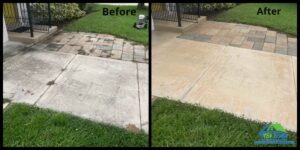
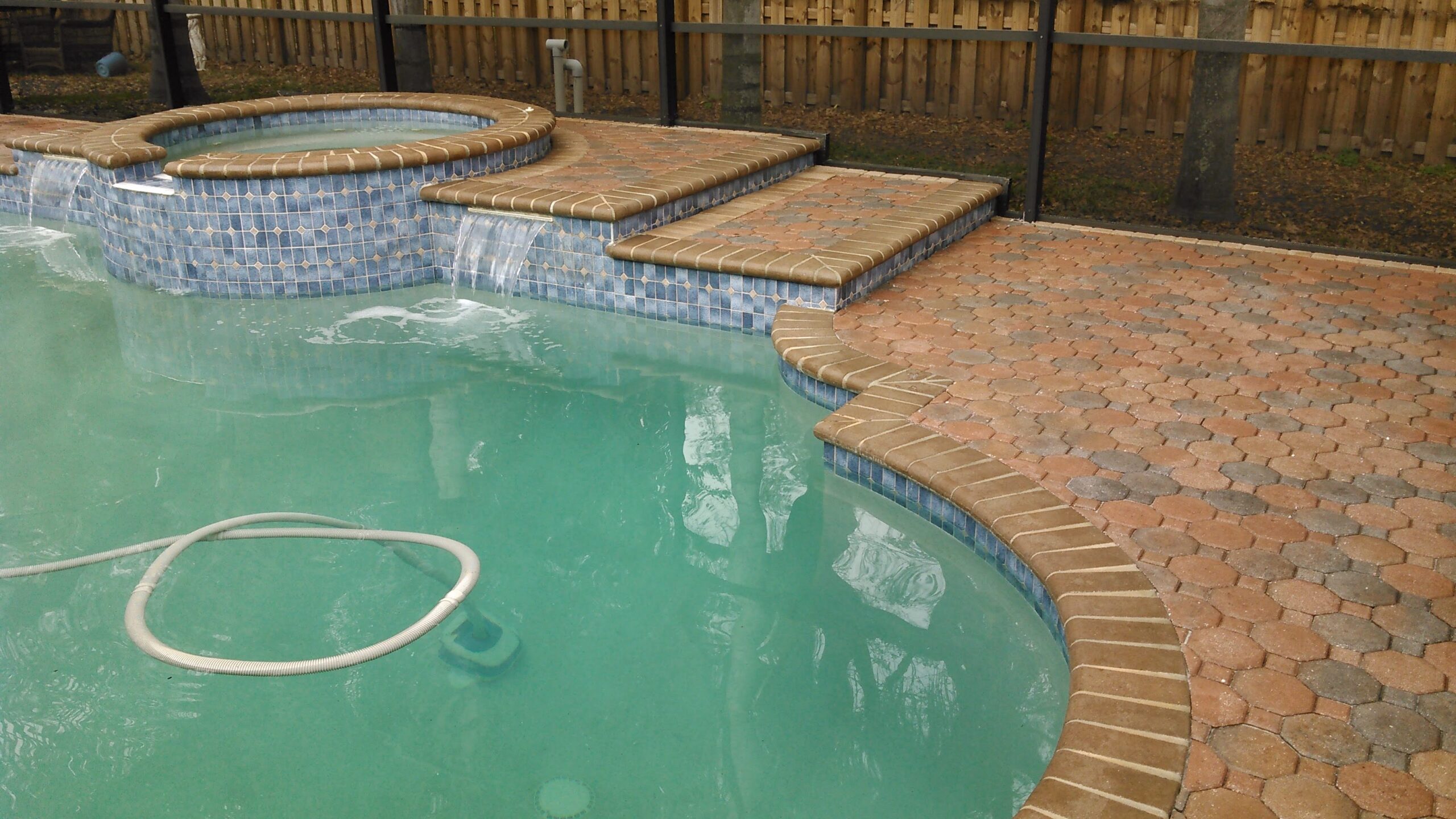
Salt water does not usually damage pavers around a pool. However, it can leave a white film that makes them look dull and faded. So the fix is simple care, and you don’t need to rip anything out.
At Top Down Exterior Cleaning, paver sealing is our main line of work. We have cleaned and sealed pool decks around Lakeland since 2010. Below, we explain what salt does, what it does not do, and how to protect your deck.
Does Salt Water Damage Concrete Pavers Around a Pool?
No, salt water does not usually damage concrete pavers. Good pavers hold up well next to a salt water pool. The industry group behind them agrees.
For example, the Concrete Masonry and Hardscapes Association says pavers perform well around salt water pools. The key is that the maker builds them to industry standards. It also explains that the salt leaves white deposits as the water dries. Those deposits can dull the surface, but the effect is not permanent.
In short, salt is mostly a looks problem on concrete pavers. Your deck is not crumbling under your feet.
What Does Salt Water Do to Pavers Around a Pool?
Salt water leaves salt behind. Pool water splashes onto the deck and then dries in the sun. The water leaves, and the salt stays on the surface.
Over time, you may see these signs:
- A white or gray haze on the pavers closest to the water
- Dull, faded color around the steps and the coping
- A crusty line where puddles dry
- White marks where wet swimmers sit or drip
How Do You Know the White Film Is Salt?
You know it is salt if fresh water washes it off. So try a quick test. Rinse one hazy area with a garden hose and let it dry.
If the haze is gone, it was salt. If the haze stays, something else is going on. For example, it may be a sealer problem or a mineral that comes up from inside the paver. In that case, have someone look at it before you scrub.
Is Salt Water Harder on Travertine Than on Concrete Pavers?
Yes, salt water can be harder on soft stone like travertine. Natural stone has more open pores than a concrete paver does. As a result, it can hold more salt.
That does not mean travertine fails around a salt water pool. However, it does need more attention. So rinse it more often, and ask before you put any cleaner on it.
What Damages Pavers Around a Salt Water Pool More Than Salt?
Acid damages pavers more than salt does. The hardscapes association warns that acidic pool cleaners can permanently harm concrete. Salt film rinses off. An acid burn does not.
Also, a few other things wear on a pool deck faster than salt:
- Chemical spills. Pool acid that drips on the deck can etch the surface.
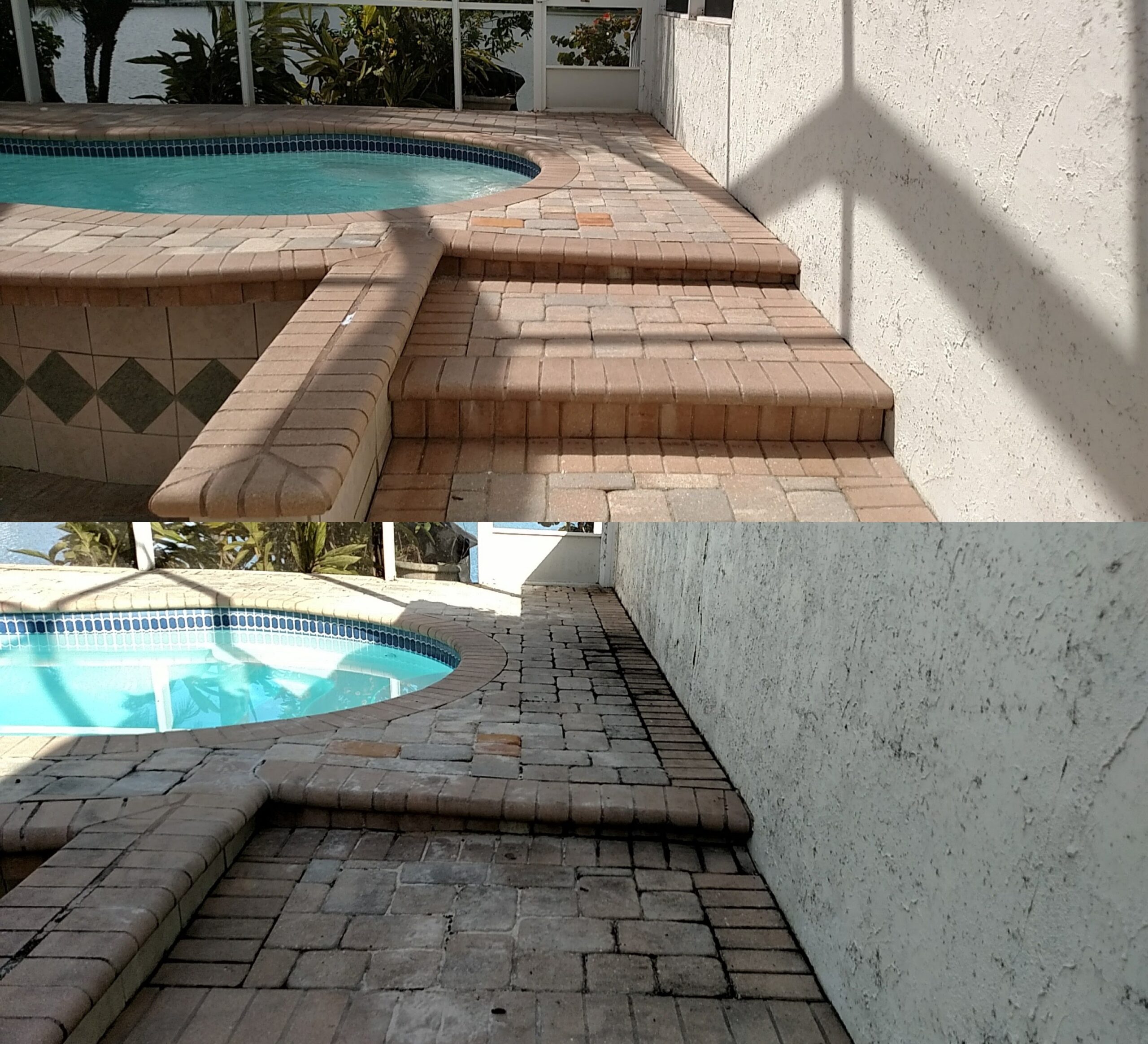
- Algae and mildew. A deck that stays wet turns dark and slick.
- Washed-out joints. Splash and summer storms pull sand from between the pavers.
- Sun. Florida sun fades pavers that have no sealer.
So if your pool deck looks rough, salt may not be the cause. Often the real problem is growth, lost sand, or plain fading.
Does Sealing Protect Pavers Around a Salt Water Pool?
Yes, sealing helps protect pavers around a salt water pool. A sealer enhances the color, and it makes surface stains easier to remove. Therefore, salt film rinses off a sealed deck with less work.
Our paver sealing in Lakeland, FL takes three steps, and most jobs take one day:
- First, we deep clean. We remove the film, the algae, and the ground-in dirt from every paver and joint.
- Next, we re-sand. We fill the joints with fresh sand to the proper level.
- Then, we seal. We apply two coats of paver sealant. It goes on milky and dries clear.
Sealing also locks in the joint sand, and it helps the deck resist new algae and stains. A first sealing typically lasts about 2.5 to 3 years.
How Do You Care for Pavers Around a Salt Water Pool?
You care for them with fresh water and a few easy habits. None of them take long, and they keep the deck looking new.
- Rinse the deck. Hose off the splash zones with fresh water after a busy pool day.
- Handle acid with care. Add pool chemicals over the water, and rinse any drip right away.
- Clear the puddles. Push standing water off so it can’t dry into a crust.
- Clean on a schedule. Most Lakeland pool decks need a professional cleaning once or twice a year.
- Reseal on time. Don’t wait until the color fades.
Should You Pressure Wash Salt Off Your Pavers?
No, you don’t need a pressure washer to remove salt. A simple rinse with fresh water is enough to bring the look back. In fact, too much pressure can blow the sand out of the paver joints and strip a sealer.
So save the deep cleaning for the dirt, algae, and stains that a hose can’t move. That is the job we handle.
Our pool deck cleaning also keeps runoff out of your pool. We direct water away from the edge, and we rinse carefully along the coping.
Ready to Protect the Pavers Around Your Salt Water Pool?
You don’t have to guess what the white film is. Top Down is family owned and insured, and we have served Lakeland since 2010. We have also earned the Angie’s List Super Service Award five times.
Contact Top Down Exterior Cleaning today for a free estimate. You can also call us at (863) 904-8956. We will come out, look at your pool deck, and tell you what it needs.